
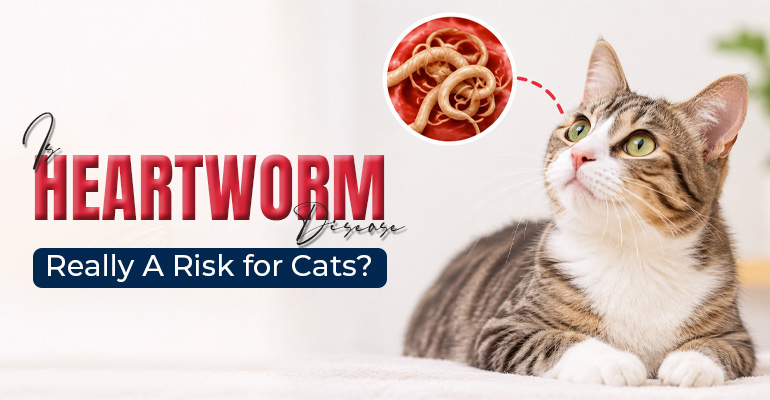
Is Heartworm Disease Really A Risk for Cats?
Cat parents often think that cats are less likely to develop heartworm disease than dogs. Although they are not as susceptible to the infection as dogs, cats are at risk of developing heartworm disease. Heartworm disease affects cats differently from dogs, so understanding the basics can help you make informed decisions about prevention and recognize possible signs of infection.
This blog includes information about heartworms in cats, how the infection affects them, how it is diagnosed and managed, and why prevention is important. Give it a read.
Can cats get heartworms?
Cats are naturally more resistant to heartworm infection than dogs. However, heartworm disease is transmitted through the bite of an infected mosquito, and cats can be bitten by mosquitoes just like dogs, making them susceptible to this infection. When it comes to the impact, the immune response to heartworm infection can cause significant inflammation and damage, even when only a small number of worms are present.
Are indoor cats safe from heartworms?
Not really. Mosquitoes can find their way inside the house through open doors or windows, and bite even cats that live exclusively indoors. Cats with access to outdoor spaces, such as balconies or catios, may be exposed to mosquitoes in the surrounding area. Mosquitoes can also breed in containers that collect standing water, such as flowerpot trays and birdbaths. This can increase the chance of mosquitoes entering your home and biting your cat.
Heartworm disease in cats
Heartworm disease is a potentially deadly infection in cats caused by a parasite worm, Dirofilaria immitis. Transmitted by the bite of an infected mosquito, the heartworm larvae grow into adult worms in several months and live inside the blood vessels, leading from the heart to the lungs. In cats, there are often only 1 to 3 adult heartworms are present, when an infection develops.
As cats have smaller blood vessels and hearts, even a small number of heartworms can cause significant damage. The lung inflammation associated with heartworm infection may lead to poor oxygenation of the blood. Due to the severity of the reaction, the fatality of heartworm disease is higher in cats compared to dogs.
What are the warning signs of heartworms in cats?
The cat’s immune response to heartworm disease leads to signs like coughing, wheezing, and dyspnea (shortness of breath). These are similar to idiopathic feline asthma. Heartworm-associated respiratory disease (HARD), however, is a separate condition caused by the inflammatory effects of immature heartworms in a cat’s lungs and airways. HARD is an important form of feline heartworm-related illness and can occur when immature heartworms trigger inflammation in the lungs and airways.
Other symptoms may include intermittent vomiting that is unrelated to eating, reduced appetite, weight loss, sudden collapse, or even sudden death (when the death of immature or adult heartworms causes pulmonary inflammation). Many cats show no obvious signs of infection, which can make the disease difficult to detect.
Why is it difficult to diagnose heartworm disease in cats?
Cats often have only one to three adult heartworms at a time, and infections may involve worms of a single sex. Heartworm antigen tests mainly detect proteins produced by mature female heartworms. As a result, infections involving only male worms, immature worms or very few adult worms may not be detected by an antigen test.
Many times, cats may not have adult heartworms and will fall sick with infections from only immature heartworms. These immature heartworms are more difficult to detect. That is why veterinarians often conduct multiple types of tests to investigate suspected heartworm disease infection in cats.
Can heartworm disease be treated in cats?
Unfortunately, there is currently no approved adulticide treatment to eliminate adult heartworms in cats. Veterinarian recommendations are focused on providing supportive care to infected cats, including restricting physical activities, using anti-inflammatory products, and regular imaging to track how the heart and lungs are responding. As per the results, adjustments in the care plan are made. In some mild heartworm infections cases, a cat’s immune system may eliminate the heartworms naturally. However, the resulting inflammatory response can still cause serious illness, so veterinary monitoring remains important.
Why heartworm prevention in cats matters?
Heartworm prevention is of utmost importance for cats due to many reasons, such as:
- Heartworm disease can be fatal or severely debilitating for cats.
- There is currently no approved adulticide treatment that safely and effectively eliminates adult heartworms in cats.
- Diagnosing heartworm infection can be challenging in cats because blood tests may not detect every infection.
- The supportive care heavily restricts the cat’s activities, making it challenging for both cats and cat parents.
- The recovery is generally difficult and may require years of efforts.
Which heartworm preventive is suitable for cats?
There are plenty of oral as well as topical heartworm preventives available, most of which are to be administered once monthly, to protect your feline friend against this fatal infection. Which one suits your cat depends on their age, weight, lifestyle, and health condition. Always opt for a vet-recommended heartworm preventive for your cat’s protection.
Some cats may be reluctant to take oral medication. If yours is also a picky eater, topical solutions like Advantage Multi for Cats can come in handy. It also treats hookworms, roundworms, and ear mites. If you want to combine tick control too, broad-spectrum products like Revolution Plus for Cats may be a suitable option.
Frequently asked questions
1. Can heartworms spread directly between pets?
No, heartworms do not spread directly between pets. The infection spreads when an infected mosquito bites an animal and transmits infective heartworm larvae through the bite.
2. How long can cats live with heartworms?
While there are no set numbers, cats can often live with heartworms for years. The death of mature heartworms may be fatal for cats, but some cats can also survive these episodes with medical management.
3. Does a cat on heartworm preventives still need testing?
Yes. Your veterinarian may still recommend regular testing, as preventives do not kill existing worms. And an undetected infection before the start of the administration of a heartworm preventive may still exist. Testing is also important if there have been gaps in the regular (mostly monthly) doses of heartworm preventives.
In a nutshell
Heartworm disease is often an underestimated health threat for cats. Though naturally resistant, cats are not completely safe from heartworm infection. Heartworm infection can have serious consequences for cats, and there is currently no approved adulticide treatment to eliminate adult heartworms in cats. Following your veterinarian’s advice on heartworm prevention is, therefore, the best way to keep your furry companion protected against this potentially fatal disease.


