
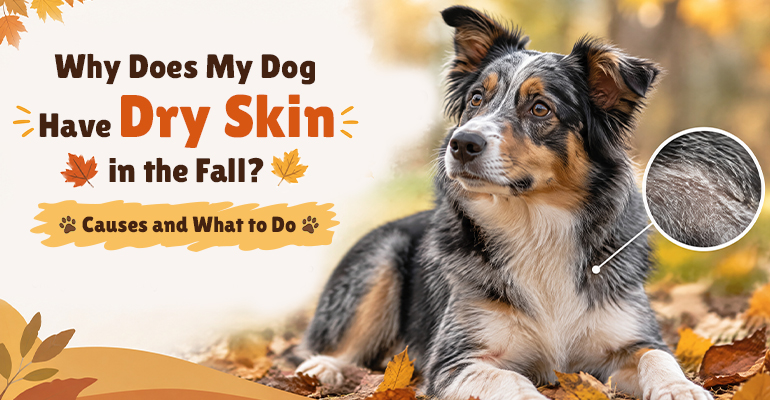
You run your hand across your dog’s back and notice little white flakes. Or maybe you’ve noticed them scratching at their sides, or their coat looks dull compared to the healthy coat they had in August. If these symptoms seem to happen right around the time the weather turns, you’re not imagining a pattern. Fall brings several environmental changes, which can affect a dog’s skin. This blog will help you understand your dog’s dry skin in the fall and what’s actually going on before assuming the worst or ignoring it entirely.
Keep reading.
What Does Dry Skin Look Like in Dogs?
Dry skin does not always look the same in all dogs, but some common signs may include:
- White or gray flakes in the coat
- Dry, flaky, or scaly skin
- A dull or brittle-looking coat
- Mild to excessive scratching
- Redness or irritation
Heavy shedding, hair loss, persistent redness, odor, scabs, or intense itching may also point to another skin problem and are worth discussing with your veterinarian.
What Causes Dry Skin in the Fall?
The Weather
As cooler weather sets in, most of us spend more time inside while enjoying the warmth of a fireplace, woodstove, or space heater. However, prolonged exposure to that drier indoor air is a seasonal factor that may contribute to your dog’s dry skin and a dull-looking coat.
This kind of dryness tends to be fairly mild and generally affects the coat more evenly rather than being concentrated in one spot. However, intense itching, significant redness, sores, hair loss, or other visible skin changes may suggest an underlying condition.
That’s a useful distinction to keep in mind as we get into the next section, because not everything that looks like “fall dry skin” is actually caused by dry air.
Fall Allergens
Autumn is also a real allergy season for dogs, even though people tend to associate seasonal allergies with spring.
Plants, such as ragweed, release pollen, which becomes a significant airborne allergen from late summer to October or November in many regions. Fall winds can spread the pollen that settles onto a dog’s coat and paws during outdoor time.
Moist conditions and piles of decaying leaves can also contribute to mold exposure, another common seasonal trigger. When a dog is sensitive to either of these, the resulting skin inflammation can initially resemble simple dryness.
This kind of allergic skin response may be associated with atopic dermatitis, which can be seasonal or persist year-round depending on the individual dog and their specific triggers. It tends to come with more intense itching than simple environmental dryness does. Dogs with an allergic reaction may scratch around their elbows, lick or chew their feet, or rub their faces. That difference in itch intensity and location is one of the more useful clues for telling fall allergies apart from simple environmental dryness, though a proper veterinary diagnosis can help.
Grooming Habits
Regardless of what’s triggering the dryness, how you’re bathing and grooming your dog plays a role too. Bathing too frequently, using a harsh shampoo, or using hot water can strip away the natural oils that help a dog’s skin retain moisture.
This makes your dog’s skin more vulnerable to dryness, on top of whatever seasonal dryness or allergy irritation is already happening. Some dogs may experience more noticeable skin problems when cooler weather coincides with frequent bathing or unsuitable grooming products.
Other Factors That Can Cause Dry Skin
A few other things can cause dry or flaky-looking skin and are worth being aware of, without assuming any of them apply to your dog specifically.
Fleas can remain a problem during fall, depending on the climate and environment, and flea allergy dermatitis can cause itching and skin irritation that has nothing to do with dry air.
Certain underlying health conditions, including hypothyroidism and Cushing’s disease, can also affect coat and skin quality over time, though these tend to come with other signs beyond just dryness, like weight changes, changes in energy level, or other changes in overall health.
None of this means every case of fall dandruff points to something serious. It just means dryness is a symptom that can have more than one explanation. That is why it’s important to have persistent symptoms evaluated by a veterinarian.
How to Treat Dry Skin in the Fall
For dryness that looks mild and seasonal, a few adjustments usually make a real difference.
- Use a Humidifier
Running a humidifier in the rooms your dog spends the most time may help if the indoor air is particularly dry.
- Adjust Bathing Frequency
Cutting back on bathing frequency gives natural skin oils more of a chance to stay put. If baths are needed, switching to a gentle, dog-specific shampoo such as Dermoscent ATOP 7® Shampoo may help maintain skin and coat health. Lukewarm water instead of hot water during baths may help reduce skin irritation.
- Regular Grooming
Regular brushing distributes natural oils through the coat and can make dryness less obvious day-to-day, along with giving you an easy way to spot changes early. Dermoscent Essential 6® can also be included as part of your dog’s regular skin and coat care routine.
- Diet and Skin Health
Your veterinarian may recommend a therapeutic diet formulated to support skin and coat health. Omega-3 fatty acid supplements may also be appropriate for some dogs, but talk with your veterinarian before adding a supplement to your dog’s diet.
These measures are not intended to treat allergic dermatitis, flea-related itching, or an underlying health condition. If fall dryness turns out to be driven by one of those instead of the weather, your veterinarian will likely recommend a more targeted approach. Depending on the cause, treatment may include parasite treatment, treatment for secondary infections, topical therapy, itch management, dietary trials, or other allergy-focused treatment.
The dividing line: home adjustments are reasonable for mild, weather-pattern dryness, but anything more persistent should be evaluated by a veterinarian so the underlying cause can be identified and treated appropriately.
Final Thoughts
Seasonal environmental changes can contribute to dry skin in some dogs. However, ragweed, mold, fleas, and other factors can also cause skin irritation. So, “dry skin” is not always simply a result of dry air. Pay attention to the symptoms your dog is showing. A little flaking in an otherwise comfortable dog may be less concerning than persistent itching, redness, sores, hair loss, or obvious discomfort. If these symptoms persist, schedule an appointment with your veterinarian.