
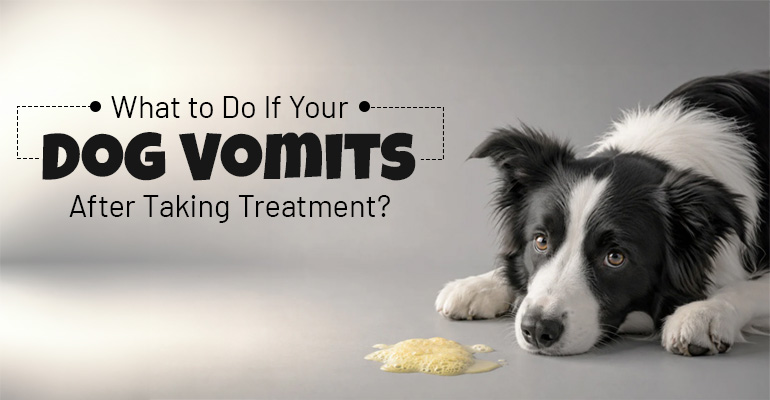
When your beloved dog throws up after taking a pill, it’s natural to have a lot of questions running through your mind. Like, did something go wrong? Is it because of the given treatment? Or is my dog okay? Don’t worry, you are not the only one dealing with this situation. In this blog, we will explain what it can mean when a dog vomits after receiving a pill and will try to answer common queries with clarity so you can know what to do next confidently!
Is This Actually an Emergency?
Firstly, stay calm and observe your dog’s overall behavior. The good news is that in most scenarios, there’s a clear way to think about what just happened and what to do next. A single episode of vomiting may be caused by a temporary upset stomach if the product was given on an empty stomach. However, some situations require immediate veterinary attention, including:
- Multiple episodes of vomiting
- Repeated retching (nothing comes up)
- Blood in the vomit
- Refusing any food and water
- Facial swelling, hives, excessive drooling, and breathing difficulty
- Vomiting accompanied by diarrhea, lethargy, or fainting
- Receiving the wrong treatment or incorrect dose
- Vomiting immediately after pill administration for a serious condition (such as infection, severe pain, or post-surgical recovery), as this may prevent your dog from absorbing the treatment effectively.
If you notice any of the above symptoms, call your veterinarian or an emergency clinic as soon as possible. These situations require professional assessment and should not be managed with just home care.
Why Do Dogs Vomit After Taking Treatment?
There could be several factors involved if you watch your dog throw up right after you’ve given a pill. Here we have mentioned some of the scenarios that may explain why your dog vomited after taking treatment:
Stomach irritation:
There are some products, particularly antibiotics, anti-inflammatories, allergy treatments, anesthetics, and chemotherapy, that can irritate your dog’s digestive tract or disrupt the balance of healthy bacteria in the digestive tract. Especially when the treatment is given without food, it may cause nausea and vomiting shortly after dosing.
Strong smell or taste:
Some treatments taste bitter, or an unpleasant smell may trigger a dog to gag and bring the pill back up. Sometimes the unfamiliarity in the throat can make the body simply reject the substance before any of it can be absorbed.
Treatment intolerance:
One of the overlooked points is that vomiting can be a part of an allergic response to an ingredient in the given treatment. This is more concerning when it comes with facial swelling, hives, and difficulty breathing. Severe, sudden symptoms such as anaphylaxis may also require emergency veterinary care.
An unrelated illness:
It does not always mean the treatment is unsafe if your dog vomits after receiving it. Sometimes it is just a coincidence. Stress and anxiety can also influence how the body reacts. Sometimes it may be dietary indiscretion, infections, motion sickness, chronic illnesses, or underlying diseases that are responsible, rather than the treatment itself.
Does the Timing of Vomiting Matter?
Yes, it does matter! It’s a useful clue that can provide your veterinarian with valuable information. As a general rule, if your dog throws up within minutes of a dose, it suggests that little to none of the dose entered the system and may not have had time to be absorbed. Vomiting after a few hours may mean that some or most of the dose has been absorbed.
That said, absorption rates may vary by the kind of treatment and its formulations, such as liquid, chewables, capsules, and tablets. Some treatments, like a chewable, dissolve differently from a coated tablet or liquid, while others remain intact until they reach the stomach.
Should You Give Your Dog Another Dose?
When your dog throws up after receiving treatment, you may assume that it was not absorbed and simply give it again, but it can lead to an accidental overdose and may cause serious complications. On the other hand, if you skip the dose that genuinely didn’t get absorbed, it could leave your dog untreated.
A dog throwing up does not automatically mean the treatment failed. The right call depends on the specific treatment, the dosage, the formulations, the delivery method, and how much time has passed. This is a decision to make with the help of your veterinarian’s guidance.
What Can You Do to Help Your Dog Feel Better at Home?
Until you hear back from your veterinarian, you can take these simple steps to make your dog feel better:
- Temporarily withhold any food for a short period as advised by your veterinarian.
- Check if your dog has any other new symptoms, such as diarrhea, lethargy, etc.
- Provide your dog with a quiet space to relax, as activity can worsen nausea.
- Reintroduce food slowly. Try to offer a small portion of bland food (such as boiled chicken and rice) and fresh water frequently rather than letting your dog gulp a large amount at once.
How to Prevent Future Vomiting with the Help of Your Veterinarian
Normally, vomiting cannot always be prevented; here are some steps you can take to reduce the risk.
- Follow the treatment instructions exactly as prescribed.
- Check if it should be given with food or without food.
- Don’t change the dose on your own.
- Make sure your dog has access to fresh water at all times.
Additionally, if you find your dog has a pattern of vomiting after a particular treatment, your veterinarian may suggest strategies to make future doses easier for you and your pet. Like,
- If it can be given with a small amount of food or treat.
- If you can use a pill pocket to mask the taste of treatment.
- If the dose can safely be split.
- For dogs that need long-term treatment, your veterinarian may suggest an alternative option that is suitable for your dog to take.
Also, monitor your dog during treatment so that no part of the dose is missed and given properly. If there are any side effects, take notes to share with your veterinarian.
Final Thoughts
This blog covers suggestions about what should be done if your dog vomits after treatment. In such a scenario, pet parents feel responsible even when they follow the instructions carefully. Avoid giving another dose, and take a note of your dog’s behavior so your veterinarian can suggest a safe and effective next step.
Frequently Asked Questions
1. What should I keep ready before calling the veterinarian?
Before calling your veterinarian, you should note the treatment name, dose, strength, when it was given, when vomiting occurred, whether the pill was visible in the vomit, and any other symptoms along with vomiting.
2. Is one episode of vomiting serious?
Not always. If your healthy dog vomits one time after treatment, sometimes it simply reflects temporary stomach irritation. Just talk to your veterinarian about it for better clarity.
3. Should I stop giving my dog the treatment if it causes vomiting?
You should not stop your dog’s treatment without speaking with your veterinarian, as it may interfere with your dog’s overall treatment.