
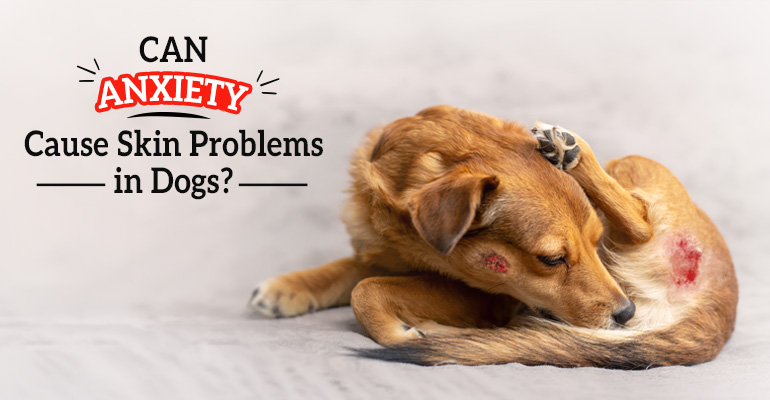
Your dog has a raw, bald patch on their front leg. You may have checked for allergies and fleas or even changed shampoos, but nothing seems to explain the problem. Then your veterinarian asks, “Has anything changed at home lately? Have there been any behavioral changes in your dog?” It may sound like an odd question to you, but anxiety can be one of the factors that contribute to skin problems in dogs. Anxious dogs may lick, chew, scratch, or groom themselves repeatedly as a way of coping. This blog explores how anxiety can cause skin problems in dogs.
How Can Stress Affect a Dog’s Skin?
Ask most dog parents what causes skin problems, and you’ll hear the same answers every time: allergies, fleas, and some kind of infection. That makes sense, as there are common causes of skin problems in dogs. But veterinarians who deal with skin issues day in and day out know that other factors, including anxiety and stress, can contribute. These factors can contribute to psychogenic dermatitis, in which stress, anxiety, and compulsive behavior patterns can cause or significantly worsen skin problems.
When dogs are chronically anxious, their bodies respond the same way ours do, with a flood of stress hormones. Chronic stress can increase cortisol levels, which may suppress local immune defenses and weaken the skin barrier, making dogs more vulnerable to secondary infections and flare-ups. However, it would be an oversimplification to say that cortisol alone directly causes a particular skin disease in dogs.
The Itch-Lick Cycle
Anxious dogs often self-soothe through excessive licking, chewing, or scratching, similar to how some people bite their nails under stress. Repeated licking removes hair and irritates the surface of the skin. Continued trauma can lead to inflammation and secondary infections. Repetitive licking can also release endorphins, potentially providing temporary relief that makes the behavior harder to stop. This can contribute to what is known as the itch-lick cycle.

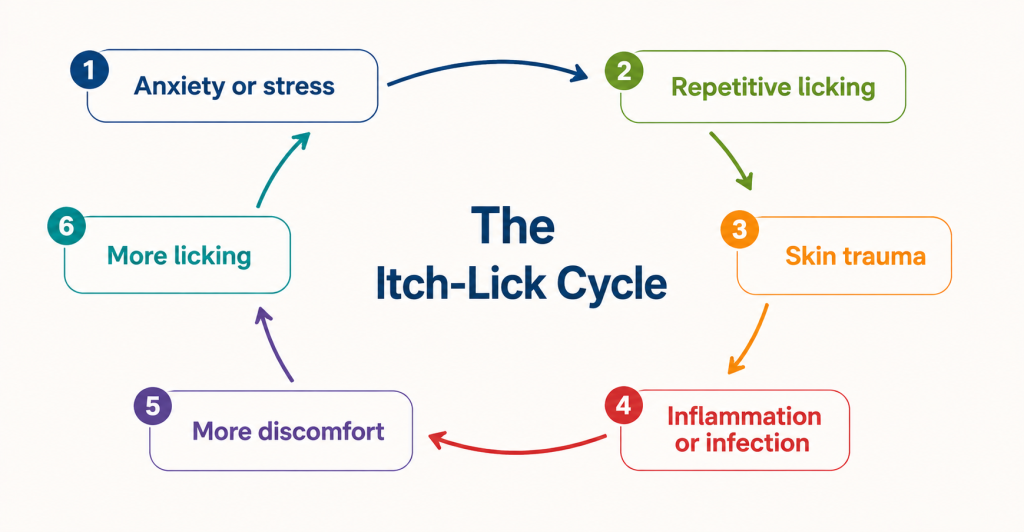
Left unchecked, this can develop into acral lick dermatitis, more commonly known as a lick granuloma. This condition is considered both physical (e.g., allergies, infection, joint pain) and psychological (e.g., fear, anxiety, compulsive disorder) in nature.
Veterinary studies note that up to 70% of dogs diagnosed with acral lick dermatitis have some kind of anxiety-related issue, such as living in confined spaces or having limited exercise and interaction with people. However, this does not mean anxiety is the original cause of every case.
Signs Your Dog’s Skin Issue May Be Stress-Related
A few patterns tend to show up when stress is behind the scratching:
1. Lick granulomas most often appear on the top and outside surfaces of the forelimbs. It can also occur on the hind limbs.
2. The timing can be useful. You may notice your dog licking or chewing more often:
- When left alone
- During thunderstorms, fireworks, or other stressful events
- After a change in the household or routine
- When exposed to a particular person, animal, or environment
- During periods when other anxiety behaviors are also present
3. Any breed can develop acral lick dermatitis, although it is reported more often in medium-to-large breeds. These include Doberman Pinschers, Great Danes, Labrador Retrievers, Weimaraners, Golden Retrievers, and Boxers.
How Are Stress-Related Skin Problems Treated?
Your veterinarian can help you find the actual cause of the skin problem in your dog. It may be parasites, allergies, infections, pain, or even stress. The most effective treatment depends on both the skin condition and the reason behind the behavior.
- Depending on the cause of the skin issue, your veterinarian may recommend treatments for infections, allergies, pain, as well as a protective barrier such as an Elizabethan collar to reduce further self-trauma. For dogs that need supportive skin care, products such as Dorwest Soothe & Calm Shampoo may provide gentle care for sensitive or irritated skin.
- If anxiety is contributing, treatment includes identifying and reducing the actual source of your dog’s stress. Your veterinarian may suggest that you keep your dog’s routine consistent, add enrichment activities to their routine, provide separation anxiety training, or, in some cases, consider anxiety-related treatment. Some pet parents may also discuss calming products with their veterinarian. For example, Dorwest Scullcap & Valerian Tablets for Dogs and Cats may support relaxation during stressful situations.
- These products do not treat the underlying anxiety or replace veterinary treatment for infection, allergies, pain, or compulsive licking. Check with your veterinarian before using any new supplement, shampoo, or other product.
Treatment can be slow and requires patience, especially in chronic cases. But early intervention gives dogs a meaningfully better chance at recovery.
Final Thoughts
Anxiety doesn’t explain every skin problem in a dog. But it’s a well-documented contributing factor for repetitive licking and scratching that damages the skin. In dogs with acral lick dermatitis, behavioral and physical factors can also reinforce one another, making the cycle of problem difficult to break. Most veterinarians take anxiety or stress in dogs seriously rather than treating it as an afterthought. If your dog’s skin issues are worsening, it’s worth considering what’s happening behaviorally as well as what’s happening with their skin.
Frequently Asked Questions
1. When should I see a veterinarian?
Have your dog examined if a skin lesion is raw, bleeding, painful, swollen, oozing, has an unusual odor, is spreading, and your dog keeps licking it. It’s important not to assume anxiety is the cause, because allergies, parasites, infections, pain, and other medical conditions can trigger similar behavior. Your veterinarian can help determine the exact cause and appropriate treatment for your dog.
2. Is lick granuloma contagious to other pets?
Lick granuloma is a self-inflicted wound from licking, not an infectious skin disease, so there’s no risk to other pets in the home.
3. Is stress more common in dogs left alone for long stretches?
Stress can be a contributing factor, particularly if it overlaps with separation anxiety. Dogs in fully attended households can develop stress too, often because of other stressors such as disturbance from loud noises or environmental changes.